Deaths in Detention: Mortality Rate for People Detained by ICE More Than Doubles Under Trump Administration

While detained at Stewart Detention Center in Georgia, experienced severe symptoms, including coughing up blood and severe pain. After weeks struggling to access medical care, he was transferred to a nearby hospital. Immigration and Customs Enforcement (ICE) formally released him from custody when he was in a coma. He died from an aggressive form of leukemia less than two weeks later.
Trejo Ricano’s name does not appear on the ICE website as one of the people who died while in ICE custody, and ICE will not be investigating what led to his death so shortly after being released from Stewart due to recent policy changes.
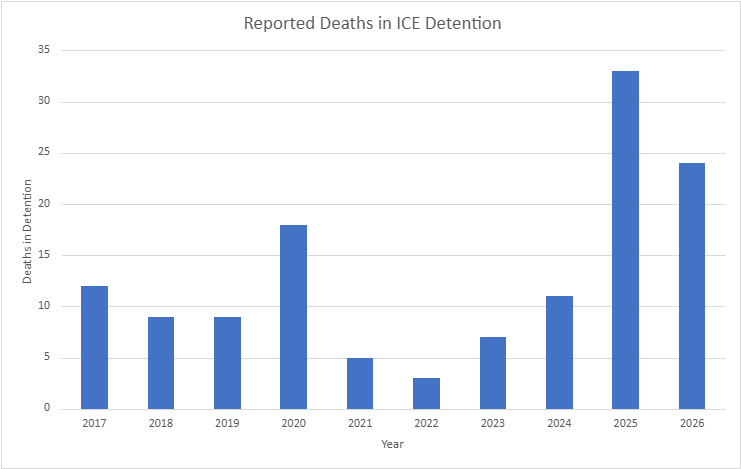
The mortality rate for people in ICE custody has from the first Trump administration and is at its highest point in more than a decade. At least 57 people have died in immigration detention since the start of the second term, more than double the number of deaths recorded from the previous four years combined. As egregious as the current mortality rate is, it still does not include an accurate death toll resulting from the neglect in ICE detention centers because of hidden deaths like Trejo Ricano’s.
Trump administration removes crucial deaths reporting requirements
Beyond recorded in-custody deaths, ICE has hidden a growing number of fatalities due to recent shifts in reporting mandates. In 2021, the Department of Homeland Security implemented a federal policy requiring ICE to report and occurring within 30 days of release from ICE custody. This measure ensured that and prevented it from releasing severely ill individuals to dodge accountability and reporting requirements. The Trump administration rescinded that policy in June in yet another move to evade oversight and transparency.
By eliminating these reporting requirements, ICE shields itself from accountability for the human cost of its medical failures. ICE is then incentivized to discharge critically ill individuals just before they die, artificially skewing official mortality statistics. Ultimately, erasing these accountability metrics only emboldens the agency to continue operating with minimal transparency, leaving detained immigrants even more vulnerable to systemic neglect and abuse.
Despite federal efforts to obstruct meaningful oversight and obscure these fatalities, the ºìÐÓÊÓƵ remains dedicated to exposing the full extent of hidden deaths in ICE custody. Through targeted Freedom of Information Act (FOIA) requests and litigation, we are fighting to ensure the deaths of these individuals are tracked so that ICE is held accountable for the true cost of its detention conditions.

Immigrants' Rights
+2 Issues
The People v. Agents of Chaos and Cruelty
Immigrants' Rights
+2 Issues
The People v. Agents of Chaos and Cruelty
In 2022, we submitted our first FOIA request seeking more information about ICE’s pattern of deathbed releases. This request sought documents related to four deaths, along with additional documents that would lead to more information about ICE’s policies and practices around these deaths and potentially uncover additional unreported deaths. When the government failed to respond to this FOIA request, we filed a lawsuit to obtain responsive documents. After successfully obtaining some records, the ºìÐÓÊÓƵ submitted another FOIA request for similar information in July this year. In addition to requesting records related to certain deathbed releases, that FOIA request also asks for documents relating to the latest elimination of the requirement for ICE to report and investigate the deaths of those people who die shortly after being released from detention. The ºìÐÓÊÓƵ is committed to shed light on these hidden deaths. That transparency is critical if we are to achieve the radical reform to put a stop to the alarming rise in deaths connected to ICE detention.
Limited oversight and egregious conditions persist in ICE detention
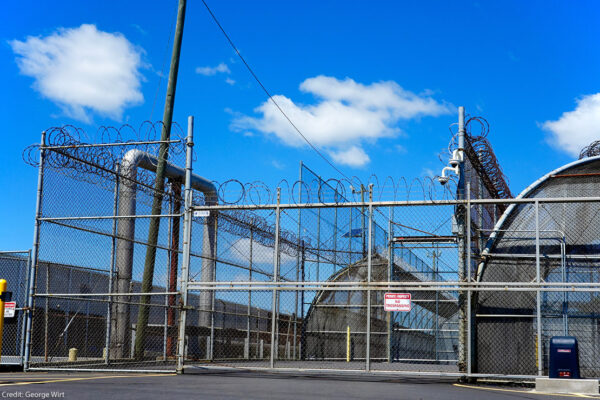
On any given day, ICE holds across a sprawling network of over As rates of immigration detention rise, the rate of deaths in detention has also surged to unprecedented levels. With the rapid proliferation of new detention centers in the form of warehouses and shuttered prisons and expansion of detention beds in existing facilities, this rising death toll raises urgent questions about proper access to healthcare, hygiene and nutrition, and conditions of confinement more broadly.
Immigrants' Rights
Human Rights
Deaths in Detention: ICE Is Rapidly Expanding Detention Camps into Warehouses Despite Record Deaths
Immigrants' Rights
Human Rights
Deaths in Detention: ICE Is Rapidly Expanding Detention Camps into Warehouses Despite Record Deaths
Alongside the rapid growth of detention operations, the administration has systemically dismantled key internal oversight mechanisms within DHS. The limited oversight mechanisms that were in place to ensure accountability in immigration detention, including the Office of the Immigration Detention Ombudsman and the Office for Civil Rights and Civil Liberties, have been, shutting down essential avenues for public complaints and accountability.
“These offices have obstructed immigration enforcement by adding bureaucratic hurdles and undermining DHS’s mission,� said in defense of the cuts. "Rather than supporting law enforcement efforts, they often function as internal adversaries that slow down operations.� By stripping away internal checks and balances, DHS has created a vacuum of oversight, furthering concerns that officers are now empowered to operate in the shadows.
Compounding with this lack of oversight, the rapid expansion of detention facilities has further strained already problematic ICE operations. The agency is consistently failing to meet basic human needs, subjecting tens of thousands of people every day to systemic and dangerous medical neglect, unacceptable sanitation conditions, and unsafe housing. For many, these dire conditions have resulted in. Without radical systemic reform and restored oversight, the current number of deaths in and outside of detention will almost certainly continue to climb.
Environmental and operational conditions inside detention facilities directly contribute to the surge in rising deaths. Overcrowding and staffing shortages create dangerous conditions for people in detention. Unsanitary conditions mean that disease runs rampant, and several facilities have reported outbreaks of and that have triggered multi-week quarantines. For those with preexisting medical or mental health conditions, slow response times and inadequate care can turn manageable illnesses into life threatening emergencies. In addition to medical neglect, reports document rampant physical abuse, excessive force, and solitary confinement. These egregious and inhumane conditions coerce people into abandoning their immigration and asylum claims and signing voluntary departure orders to third countries.
Facing increased scrutiny, DHS has also recently announced a pause on the purchase of additional warehouses for immigration detention. Still, some of the facilities the agency has already acquired will continue to be developed for mass detention. Amid record deaths, documented abuses, and signs of profit-seeking, the expansion of immigration detention facilities demands urgent action. We encourage members of the and to co-sponsor the Dignity for Detained Immigrants Act. The bill would repeal mandatory detention, end family detention, and create a presumption of release and impose a higher burden of proof to detain primary caregivers and vulnerable populations. It would also phase out the use of private detention facilities and jails over a three-year period and require DHS to establish civil detention standards that provide, at minimum, the level of protection in the American Bar Association’s Civil Immigration Detention Standards. The bill would also mandate the DHS inspector general to conduct unannounced inspections with meaningful penalties for failure to comply with standards and require DHS to admit members of congress to detention facilities for unannounced inspections. The question is no longer whether the system is broken, but whether we are willing to confront and dismantle what it has become.
Related Issues
Related Content
-
Press ReleaseSep 2026

Immigrants' Rights
D.c. Circuit To Hear Upcoming Arguments On Trump Administration’s Defiance Of Court Order And Cecot Deportations Under Alien Enemies Act . Explore Press Release.D.C. Circuit to Hear Upcoming Arguments on Trump Administration’s Defiance of Court Order and CECOT Deportations Under Alien Enemies ActÂ
WASHINGTON — On Sept. 25 and Sept. 29, the D.C. Circuit Court of Appeals is facing a direct test of executive accountability in two high-stakes J.G.G. v. Trump hearings. Both hearings stem from the Trump administration’s March 2025 decision to invoke the wartime Alien Enemies Act to send more than 100 Venezuelan men to CECOT, El Salvador’s notorious mega-prison, without due process and in defiance of D.C. District Court Chief Judge James Boasberg’s order to halt the removal flights. The ºìÐÓÊÓƵ and ºìÐÓÊÓƵ of D.C. are counsel in this case. The Sept. 25 hearing focuses on whether the men sent to CECOT are entitled to finally get hearings, either remotely or back in the United States, to show that they are not part of the Tren de Aragua gang and that their removal from the United States under the Alien Enemies Act without a hearing was illegal. The Sept. 29 hearing focuses on accountability — specifically, whether Trump officials will face consequences for openly defying a federal judge. It will be en banc, meaning all 11 active judges will hear the argument — a procedure rarely used in the D.C. Circuit. More than 200 former judges have filed an amicus brief urging the court not to let the administration escape accountability. In opinions issued in connection with prior proceedings in this case, judges on the circuit have already written that the government’s actions forming the basis of Judge Boasberg’s contempt inquiry raised “grave rule-of-law concerns.â€� As Judge Pan wrote, “When the political branches cease to honor the judgments and decisions of the judiciary, the carefully calibrated structure of our government collapses, and we are no longer a society that is protected by the rule of law.â€� WHAT: Sept. 25 — Panel Hearing: A three-judge panel will hear argument on whether the Venezuelan men sent to CECOT without due process are entitled to a hearing. Sept. 29 — En Banc Contempt Hearing: Argument before the full D.C. Circuit on the criminal contempt inquiry into whether Trump officials willfully defied a federal court order. WHO: Lee Gelernt, Deputy Director, ºìÐÓÊÓƵ Immigrants' Rights Project, will argue both cases. WHEN: Friday, September 25, 9:30 a.m. ET Tuesday, September 29, 9:30 a.m. ET WHERE: Barrett Prettyman United States Courthouse 333 Constitution Ave NW Washington, D.C. Court details: https://www.cadc.uscourts.gov/ Court audio streaming information here: https://www.youtube.com/USCourtsCADC ADDITIONAL RESOURCES: Case page: HERE Amicus brief filed by more than 200 former judges: HERE -
Press ReleaseSep 2026
Immigrants' Rights
New Aclu And Afl-cio Report Shows Deportations Lower Wages And Raise Costs For America’s Workers. Explore Press Release.New ºìÐÓÊÓƵ and AFL-CIO Report Shows Deportations Lower Wages and Raise Costs for America’s Workers
WASHINGTON — The ºìÐÓÊÓƵ and the American Federation of Labor and Congress of Industrial Organizations (AFL-CIO) today released a new report, Citizenship and the Affordability Agenda: A Path to Better Jobs, Higher Wages, and Prosperity for All, detailing how the mass deportation agenda is exacerbating the affordability crisis by disrupting critical industries, eliminating jobs, weakening workplace protections, and driving up costs for working families. The findings come as communities continue to suffer the impact of mass de-legalization, record levels of immigration arrests and rebound from the economic toll of militarized enforcement operations like Minnesota’s “Operation Metro Surge." The report finds that a broad path to citizenship would stabilize jobs and prices across the construction, hospitality, and care industries that families depend on while raising wages for all American workers. It also examines how Congress has committed at least $240 billion to immigration enforcement, while cutting funding for programs that help families afford food and health care, including SNAP, Medicaid, and Affordable Care Act subsidies — and in some cases allowing them to expire. “Deportations make workers poorer and more vulnerable to exploitation by employers,â€� said Naureen Shah, director of government affairs, equality division at the ºìÐÓÊÓƵ. “When ICE continuously raids a community, everyone pays for it – in lost jobs higher prices and damaged businesses. The only immigration agenda that actually improves affordability is one that creates a broad path to citizenship.â€� “Working people are paying the price for an immigration system that is destabilizing entire industries and communities and making it easier to exploit workers,â€� said AFL-CIO President Liz Shuler. “As this report demonstrates, a broad pathway to citizenship for all would raise wages, create more and better jobs, and strengthen our economy in ways that help all of us. It’s past time to give millions of working people and their families the stability they deserve, and we call on Congress to make citizenship a top priority. Working people know that it’s not an immigrant that stands between them and a good job—it’s the billionaires—and it’s time our laws reflect that. Among the report’s key findings: Immigration enforcement enables workplace exploitation. The federal government now spends 91 times more on immigration enforcement than on labor-standards enforcement, which leaves workplaces more dangerous and enables employers to violate wage, safety, and overtime laws while crushing worker organizing. More than a quarter of workers in low-wage industries report minimum-wage violations. While these abuses are highest among immigrant workers, they are widespread enough to suppress pay and standards for all workers in those industries, regardless of immigration status. Immigration raids stunt business activity and revenue creation. Immigration raids and enforcement surges have terrified people from going to work, shopping, dining out, and participating in their communities. The report cites an estimated 8.1 billion fewer visits to businesses and between $3 billion and $14 billion in lost annual spending. For example, Minnesota businesses lost $10–$20 million a week during and after “Operation Metro Surge.â€� Mass deportation eliminates jobs held by U.S. citizens. The Economic Policy Institute projects continued pursuit of the administration’s deportation agenda could eliminate nearly 6 million jobs, almost half of which are currently held by U.S. citizens. Stripping workers’ legal immigration status is worsening the affordability crisis. The Trump administration’s mass “de-documentationâ€� campaign has stopped work authorization from nearly 2 million people, disrupting key industries like construction and hospitality. A broad path to citizenship would create jobs and raise wages. Creating a path to citizenship would create hundreds of thousands of new jobs and substantially raise wages for every American worker= by removing immigration status as a tool employers use to suppress pay and silence workers. This report, published in partnership with the AFL-CIO, is the third in the ºìÐÓÊÓƵ’s affirmative vision series, in which policy and legal experts explore how the Trump administration’s immigration agenda has harmed communities nationwide, undermined our democracy, and wreaked havoc on key industries and weakened the American workforce. The series will also outline steps that members of Congress, as well as state and local policymakers, can take to reform the U.S. immigration system and inoculate against future attacks on our rights and safety. You can read the full report here: /publications/citizenship-and-the-affordability-agenda-a-path-to-better-jobs-higher-wages-and-prosperity-for-all -
News & CommentarySep 2026
Immigrants' Rights
The Trump Administration Is Disappearing Immigrants And Asylum Seekers In Growing Third Country Removal Campaign. Explore News & Commentary.The Trump Administration Is Disappearing Immigrants and Asylum Seekers in Growing Third Country Removal Campaign
Through shadowy deportation agreements, the Trump administration is sending detained individuals to countries where they have no ties — and may face persecution. -
Press ReleaseSep 2026
Immigrants' Rights
Parties File Joint Request To Dismiss Supreme Court Immigration Detention Case. Explore Press Release.Parties File Joint Request to Dismiss Supreme Court Immigration Detention Case
WASHINGTON — Today, both parties in Genalo v. G.M. filed a joint stipulation asking the U.S. Supreme Court to dismiss the case as moot following a pardon granted by New York Governor Hochul that eliminated the basis for Mr. G.M.’s deportation and detention. At the request of both sides, the Supreme Court dismissed the case, thereby cancelling upcoming arguments. The Second Circuit ruling requiring due process protections for prolonged detention will remain in place. Mr. G.M. is a lawful permanent resident who was held in ICE detention for 21 months without a bond hearing. His now-moot case challenged his prolonged immigration detention without meaningful due process. The ºìÐÓÊÓƵ, New York Civil Liberties Union, MacArthur Justice Center, and Hecker Fink LLP are co-counsel in this case. “This is a great outcome for our client who no longer faces the threat of deportation and future immigration detention,â€� said Cecillia Wang, national legal director of the ºìÐÓÊÓƵ. “The Second Circuit reached the correct decision in recognizing that prolonged immigration detention cannot continue without due process, and that decision will remain in place. We will continue to defend our Constitution’s limits on immigration detention and will keep up the fight against Trump administration’s extreme, unprecedented, and lawless positions.â€� "We are heartened that our client will not be separated from his family," said Amy Belsher, supervising attorney at the New York Civil Liberties Union. "The Second Circuit made abundantly clear that immigrants are entitled to due process, and we're gratified that their ruling will protect all those in the Second Circuit from prolonged detention." "Mr. G.M. spent 21 months locked away by ICE, separated from his family and community, without any consideration of whether he actually posed a danger or a flight risk. The Second Circuit saw that for what it was: a violation of due process," said Amit Jain, Counsel for the Supreme Court and Appellate Program at the MacArthur Justice Center. "This is a victory for Mr. G.M., and we will continue to fight alongside anyone, regardless of immigration status, who experiences such grave violations of due process." The administration’s position in Genalo v. G.M. drew cross-ideological opposition with 11 amicus briefs filed in total, including from former Republican senior government officials, members of Congress, and a former federal judge. In an amicus brief supporting G.M., they wrote that in their prior government roles they had “never asserted, nor ever heard the Government argue to this Court,â€� that a noncitizen detained under this law has no fundamental liberty interest. Although Genalo v. G.M will no longer proceed before the Supreme Court, the Trump administration’s efforts to expand mandatory detention and deny bond hearings to people who are immigrants, including longtime residents with deep ties to their families and communities, continues. Similar cases could make their way to the Supreme Court and will be met with forceful defense of due process. The joint stipulation is available here.