At Liberty Podcast
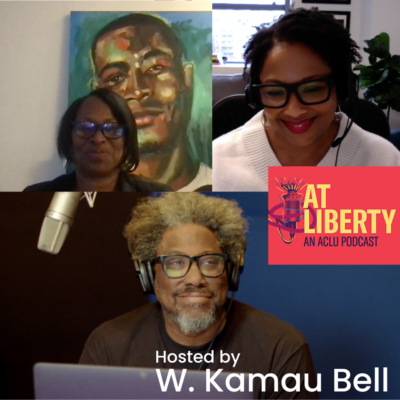
At Liberty Podcast
Know Your Right To Transportation Justice with Deborah Archer and Sister Helen Jones
April 11, 2025
You know that phrase “born on the wrong side of the tracks”? Well, there’s something to it: highways, roads, and sidewalks across America have, for decades, been racial and economic dividers. These thoroughfares don’t just reflect inequality—they continue to play an active role in it.
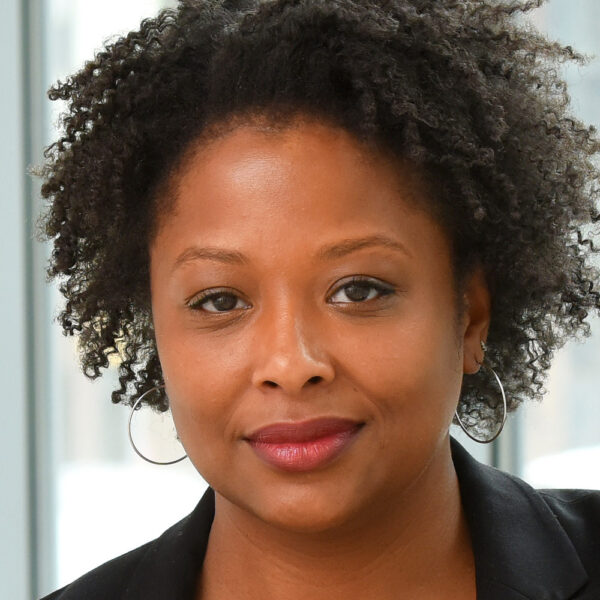
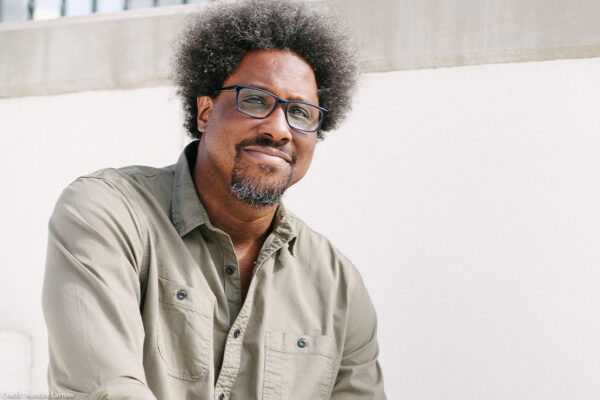
This week, W. Kamau Bell is joined by Deborah N. Archer and Sister Helen Jones for a conversation about transportation infrastructure in the United States, and what a safer, more equitable system could look like.
In this episode
This Episode Covers the Following Issues
Related Content
-
News & CommentaryAug 2026

Racial Justice
Montana Sets Gold Standard For Indigenous Education Nationwide. Explore News & Commentary.Montana Sets Gold Standard for Indigenous Education Nationwide
The ºìÐÓÊÓƵ, ºìÐÓÊÓƵ of Montana, and the Native American Rights Fund reached a landmark settlement to resolve a class action lawsuit over the state’s failure to implement its own Indigenous education law. -
Press ReleaseAug 2026

Racial Justice
Historic Agreement Strengthens Indian Education For All Across Montana Schools. Explore Press Release.Historic Agreement Strengthens Indian Education for All Across Montana Schools
HELENA, Mont. — The Montana Office of Public Instruction has agreed to a landmark settlement that would create long-awaited accountability measures to ensure Montana schools fully implement the state constitution’s guarantee that the unique cultural heritage and contributions of the Indigenous peoples of the region are recognized and taught across the state. The agreement marks a major milestone in fulfilling Montana’s constitutional and statutory commitment to teach all students — Native and non-Native alike — about the histories, cultures, governments, and contributions of Tribal Nations in Montana. The settlement was preliminary approved by the court Monday and is subject to final court approval following a notice period. Under the agreement, Indian Education for All (IEFA) would be incorporated into state accreditation and monitoring systems, making implementation a core expectation for Montana’s K-12 schools. It also formalizes Tribal consultation processes, ensuring Tribal Nations have an ongoing role in shaping how Indigenous education is developed and delivered statewide. “For too long, Tribes were expected to trust that things would improve without having a seat at the table,” said councilwoman Roxanne Gourneau, Ft. Peck Tribal Executive Board Member. “This settlement recognizes that Tribal Nations are essential partners in educating Montana’s students.” The class-action lawsuit, DuPuis-Pablo v. Montana Office of Public Instruction, was filed in 2021 by 18 Montana students and their guardians, together with Tribal Nations including the Assiniboine and Sioux Tribes of the Fort Peck Reservation, Confederated Salish and Kootenai Tribes of the Flathead Reservation, Fort Belknap Indian Community, Little Shell Tribe of Chippewa Indians of Montana, and Northern Cheyenne Tribe. At the heart of the case was a promise embedded in Montana’s constitution: that all students learn about the histories, cultures, and contributions of the Indigenous peoples of the region. Montana remains the only state in the nation with an explicit constitutional guarantee of Indian education. For more than two decades, IEFA has required Montana schools to provide education about Tribal histories, cultures, and contemporary Tribal governments. While nationally recognized as a model of Indigenous education, implementation has varied widely across school districts and lacked meaningful enforcement. “This agreement finally puts accountability behind Indian Education for All,” said Alex Rate, legal director, ºìÐÓÊÓƵ Montana. “For years, the law existed without meaningful oversight. Now there are clear systems to help ensure the state and school districts fulfill obligations that already exist under the Montana Constitution and IEFA.” The agreement requires schools to demonstrate that Indian Education for All is integrated across curriculum areas, that IEFA funds are used appropriately, and that Tribal Nations are meaningfully engaged in developing Indian education programs. For students, the changes are expected to bring more consistent and substantive instruction about Native history, culture, and contemporary Tribal governments — moving beyond isolated lessons or superficial coverage. For Native students, it also means classrooms that better reflect their identities, histories, and lived experiences. “As parents who were raised attending Montana schools, we have firsthand experience of what it looks like when Indian Education is not included in school curriculum and culture,” said Crystal and Tyler Amundson, two parent plaintiffs. “All public school students should have access to learning that promotes understanding, which is why we’re proud that our children now attend Montana public schools that mirror Montana’s diverse population. But this settlement isn’t just about celebrating diversity, it’s about ensuring that my children, who are not Native, experience a more accurate and inclusive version of Montana’s history, present, and future.” “Montana is the only state that has Indian Education for All, but how are we ensuring that it’s being carried out?” asked Cammie DuPuis-Pablo, a parent plaintiff. “Hopefully, this settlement will push back against the ignorance and lack of knowledge that is all too common. I didn’t get to see accurate representations of Native Americans when I was in school, my oldest kids didn’t get that when they were in school, but — with this settlement — maybe my youngest kids will. Because our ancestors’ story is meaningful, it’s what happened, and it should not be cut out from the history of America, or I would say Turtle Island.” “This agreement helps prevent classrooms where Native history is missing, misunderstood, or treated as optional,” said Mark Carter, senior staff attorney at Native American Rights Fund (NARF). “It makes clear that Indian Education for All is not a suggestion — it’s the law that was created by the people of Montana.” Crystal Pardue, senior staff attorney with ºìÐÓÊÓƵ, said the agreement could serve as a model beyond Montana. “This settlement shows what real accountability looks like,” Pardue said. “This lays out exactly what states must do: pair strong curriculum requirements with clear standards, consistent oversight, and meaningful partnership with Tribal Nations to ensure accurate, inclusive education in every classroom.” “This settlement is a long overdue step toward honoring the promise that Montana made to its students in 1972, that every child learns about the histories and cultures of our Tribal Nations,” said Michael Dolson, council chairman of the Confederated Salish and Kootenai Tribes. “Indian Education for All builds the understanding and respect that all of our communities need. This settlement means accountability for implementing that commitment, with real reporting, real curriculum developed with Tribes, and real consequences when schools fail to deliver.” The plaintiffs were represented by the ºìÐÓÊÓƵ of Montana, ºìÐÓÊÓƵ, Native American Rights Fund, K&L Gates, LLP and Venable LLP. A copy of the settlement is available here. A copy of the preliminary approval order is available here. The case page can be found here. -
News & CommentaryAug 2026
Racial Justice
A Multi-generational Fight For Desegregated Schools In Los Angeles. Explore News & Commentary.A Multi-Generational Fight for Desegregated Schools in Los Angeles
For more than 40 years, equal access to educational opportunities of Los Angeles students under the California Constitution have been protected by a court order. Now, those court-ordered protections are being challenged. -
Press ReleaseJul 2026
Free Speech
Racial Justice
Aclu And Aclu Of North Dakota File Brief In Support Of Right To Protest On Public Roads. Explore Press Release.ºìÐÓÊÓƵ and ºìÐÓÊÓƵ of North Dakota File Brief in Support of Right to Protest on Public Roads
ST. LOUIS — The ºìÐÓÊÓƵ and the ºìÐÓÊÓƵ of North Dakota filed an amicus brief today with the United States Court of Appeals for the Eighth Circuit in Thunderhawk v. Kirchmeier, a case that challenges the government’s decision to close a public road during a Standing Rock protest, preventing people from assembling to express their opposition to the Dakota Access Pipeline. In the brief, the ºìÐÓÊÓƵ argues that roads of every kind — including rural roads, multi-lane roads and high-speed roads — have served as sites of protest throughout United States history, from the civil rights marches and anti-war demonstrations of the 1960s and ’70s to more recent protests, including marches in opposition to abortion, in support of rural healthcare and against police brutality. Courts across the country have long recognized that roads are quintessential traditional public forums and open for public assembly, debate, and the communication of ideas. “The government’s argument disregards our history of protest in the United States and misinterprets our fundamental First Amendment rights. Our right to assemble and protest in the streets should never depend on the type of roadway chosen,” said Andrew Malone, senior staff attorney for the ºìÐÓÊÓƵ of North Dakota. “The Supreme Court has repeatedly affirmed that protesting in public streets is a time-honored American right. It is long overdue for police officers, prosecutors and government officials to uphold this constitutional standard.” For nearly eight years and through multiple rounds of dismissals and appeals, the government has argued that some streets, including rural roads, don’t belong to the community and that the road at issue in this case doesn’t deserve the same protection afforded to other public spaces. But, the ºìÐÓÊÓƵ argues in the brief, as one of the few communal spaces in rural areas, these roads are uniquely positioned to offer rural communities – and those wishing to address them – a public space in which to associate, communicate thoughts and discuss public issues. “Protesting on public roads is as American as apple pie, and that doesn’t change whether the road is a rural highway in North Dakota or 42nd St in New York City,” said Vera Eidelman, senior staff attorney with the ºìÐÓÊÓƵ’s Speech, Privacy, and Technology Project. “People can turn the page in a magazine or change the channel on TV, but streets remain one of the few places where we have to confront ideas we might otherwise tune out—and that’s why our rights to protest on streets, sidewalks, and in public parks are so important.”