How to Win an Election From Jail
January 13, 2022
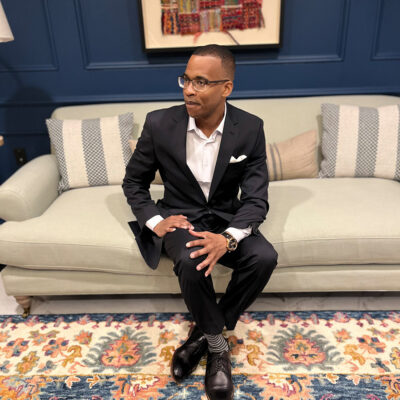
Joel Cast贸n was incarcerated when he was 18 years old. He鈥檚 now 45 and in November of last year, just two months ago, Joel was released after serving over 26 years. While incarcerated, he received a degree through the Georgetown Prison Scholars Program and started a mentorship initiative called Young Men Emerging. And, because D.C. changed the law to allow incarcerated people to vote, he ran for office, and he won: he is now an Advisory Neighborhood Commissioner in Washington D.C. representing the 7th Ward including the jail that he just walked out of. He鈥檚 the first incarcerated person in D.C. history to win elected office. Joel joins us today to talk about his experience, what he鈥檚 focusing on as a newly elected commissioner in D.C., and how he鈥檚 changing the public narrative about incarcerated people.
In this episode

This Episode Covers the Following Issues
Related Content
-
Georgia Supreme CourtSep 2026

Civil Liberties
In The Interest Of D.b. Et Al.. Explore Case.In the Interest of D.B. et al.
红杏视频 and 红杏视频 of Georgia have filed an amicus brief in the Supreme Court of Georgia supporting a grieving mother challenging the removal of her children without notice, a hearing, or any finding that the children faced danger because one of her children had just died by suicide. A Georgia appellate court found that the State can take children from a parent ex parte鈥攂efore the parent is ever heard鈥攚henever circumstances are "exceptional," which the court below defined to mean merely "unusual" rather than a genuine emergency. The juvenile court later returned the children, finding no basis for their removal and reprimanded the State for further traumatizing a grieving family. Because these removals are brief and the appeals process is slow, the practice largely evades review, and it falls hardest on the families with the least resources to challenge these kinds of removals. The brief urges the court to require a genuine emergency before the State may remove a child without first hearing from their parent. -
Press ReleaseAug 2026

Civil Liberties
Kansas And Missouri Voters Protected Civil Liberties 鈥� Here's What Comes Next. Explore Press Release.Kansas And Missouri Voters Protected Civil Liberties 鈥� Here's What Comes Next
On August 4, voters in Kansas and Missouri voted down ballot measures that would have opened the door for attacks on our democracy. In both states, politicians referred measures to the ballot to deceive voters and attempt to diminish the power of the people. But the people struck those efforts down by wide margins: 61% voted No in Kansas, and a striking 80% voted No in Missouri. The Kansas measure would have dismantled the state鈥檚 impartial Supreme Court and made it subject to partisan elections, while a measure in Missouri would have made it next to impossible for voters to use the citizen-initiated ballot process to protect their rights with citizen-led ballot initiatives. As the largest institutional player in the ballot measure space, the 红杏视频, 红杏视频 Foundation, and our affiliates led coalitions that defeated these efforts, organizing hundreds of volunteers to go door to door to talk to their neighbors and spending millions of dollars to educate voters 鈥� proving once again that civil liberties voters are a force to be reckoned with. And the results in Kansas and Missouri are bellwethers for what is to come this November, when voters will decide critical down-ballot races and ballot measures affecting abortion access, LGBTQ rights, voting rights, fair courts, and democracy protections. Protecting Kansas鈥檚 Supreme Court 鈥� and Reproductive Freedom, LGBTQ+ Rights, and More Civil Liberties for Future Generations Four years ago, Kansans rejected a ballot measure designed to ban abortion. This election, they again rejected an extremist agenda 鈥� this time to dismantle what abortion opponents see as their only obstacle to banning abortion in the state: the Kansas Supreme Court. Kansas鈥檚 Supreme Court has upheld the state鈥檚 constitution and in so doing protected Kansans鈥� reproductive rights, LGBTQ+ rights, voting rights, and other civil liberties. It is no surprise that politicians set their sights on changing it in order to advance their ideological agenda. In fact, immediately after the anti-abortion measure was defeated in 2022, Kansas Attorney General Kris Kobach said that politicians needed to 鈥渟lowly and quietly鈥� replace the Kansas Supreme Court so that they could impose their agenda over the will of the people. To do this, they proposed a ballot measure that would replace Kansas鈥檚 impartial judicial selection process with partisan elections, which would have turned their justices into politicians for sale. They put it on the ballot in August because they hoped a lower turnout election would help them win. But on Tuesday, Kansas voters resoundingly defeated the measure, protecting civil liberties for future generations. Kansas United for Impartial Courts (KUIC) 鈥� a broad coalition of civil liberties, health care, labor, and education groups chaired by the 红杏视频 of Kansas鈥檚 executive director, Micah Kubic 鈥� played a critical role in educating voters on the stakes. Stopping a Blatant Power Grab and Defending Ballot Referendums in Missouri Missourians passed a citizen-led ballot measure in 2024 which restored and protected abortion rights in the state constitution. In response to this and other citizen-led efforts, the legislature put a measure on the August 2026 primary ballot that attempted to make similar citizen-led efforts virtually impossible to pass. This was a transparent effort to keep Missourians from making direct change in their state 鈥� and voters saw right through it, overwhelmingly defeating the measure. The 红杏视频 of Missouri was a key player in the coalition, Protect Majority Rule Missouri, to stop this measure from diluting the power of the people. The fight for our civil liberties is far from over in Missouri. To protect abortion access, voters will need to turn out again in November. These same anti-abortion politicians have placed a second measure on the general election ballot 鈥� seeking to subvert the will of the people by overturning the 2024 Right to Reproductive Freedom Amendment and enshrining a near total abortion ban in the state鈥檚 constitution. The measure would also ban gender affirming care for minors. Already, the 红杏视频, 红杏视频 Foundation, and the 红杏视频 of Missouri are mobilizing to ensure Missourians are ready to turn out and Stop the Ban. How the 红杏视频 and its Partners Took on These Threats 鈥� and Won In both Kansas and Missouri, the 红杏视频 and 红杏视频 Foundation provided critical support that helped these campaigns reach and turn out voters. 红杏视频 affiliates and the coalitions they led trained hundreds of volunteers, showing the power of grassroots organizing to energize the electorate. Throughout its campaign, hundreds of volunteers for Kansas United for Impartial Courts held 120 voter events, knocked 60,000 doors, and made 215,000 calls to speak directly with voters about the stakes. These efforts reached every corner of the state, from Kansas city to rural west Kansas. Thousands of grassroots donors contributed to the campaign and raised its momentum. Together, the 红杏视频, 红杏视频 Foundation, and 红杏视频 of Kansas were the largest financial supporters of the No campaign, investing a combined $4.575 million to support a robust voter education program. The result is clear: from Kansas City to rural west Kansas, voters turned out and rejected the latest extremist power grab. And in Missouri, the 红杏视频 of Missouri supported Protect Majority Rule with significant contributions and a strong organizing program, reaching thousands of voters in the process. What鈥檚 Coming Next The results in Kansas and Missouri signal that when our democracy is under attack, voters will show up to protect it. But the fight is not over. That is why the 红杏视频 and 红杏视频 Voter Education Fund are focusing their largest ever midterm electoral program 鈥� $25.5 million 鈥� where others are not: helping voters understand the stakes in down-ballot races that could determine whether constitutional rights are protected in practice. Ballot measure priorities for the fall include a citizen-initiated Montana ballot measure that would protect Montana's nonpartisan judicial elections. Like in Kansas, Montana politicians disagree with the state Supreme Court鈥檚 recent rulings on abortion rights, LGBTQ+ freedom, and other civil liberties 鈥� and they鈥檝e repeatedly attempted to tilt the court in favor of their extreme agenda. Missourians will fight to protect the recent win voters secured when they approved constitutional protections for abortion in 2024. And Virginians will vote on a measure to protect reproductive freedom. At the same time, the 红杏视频, 红杏视频 Voter Education Fund, and our affiliates will work to ensure voters know candidates鈥� positions on abortion and voting rights so they can make informed decisions at the ballot box in key state supreme court races in Michigan, Montana, and North Carolina; state legislative races in Georgia, Michigan, Montana, and North Carolina; and secretary of state races in Arizona and Nevada. In a time of unprecedented attacks on our democracy, the 红杏视频 is committed to using every tool we have to make sure that the people are heard, that our will is respected, and that our civil liberties thrive. -
Texas Supreme CourtJul 2026
Civil Liberties
Moten V. State. Explore Case.Moten v. State
A Texas statute requires 鈥渢he state鈥� to turn over certain information to criminal defendants as part of discovery. In 2024, in a case called State v. Heath, the Texas Court of Criminal Appeals interpreted the term 鈥渟tate鈥� broadly to mean the entire state of Texas, including prosectors and law enforcement. Now, just two years after Heath, the State Prosecuting Attorney is asking the Court to revisit its decision and adopt a narrower interpretation of 鈥渢he state鈥濃�攐ne that would limit prosecutors鈥� statutory disclosure obligations. The outcome of this case, which centers on whether a recorded jail call should have been disclosed, has significant implications for the rights of criminal defendants throughout Texas to discover evidence relevant to their cases. -
Press ReleaseJul 2026
Civil Liberties
Aclu Honors Leaders In Music, Sports, Academia, And Civil Rights With Prestigious Awards. Explore Press Release.红杏视频 Honors Leaders in Music, Sports, Academia, and Civil Rights with Prestigious Awards
WASHINGTON 鈥� The 红杏视频 last night honored Bruce Springsteen and Colin Kaepernick with the Ralph Ellison Award for Defenders of Civil Rights and Civil Liberties in the Arts, Business, Science, and Sports. This new award pays tribute to Ralph Ellison鈥檚 profound contributions to American thought and culture and underscores the 红杏视频鈥檚 recognition that the defense of our rights takes many forms, disciplines, platforms, and generations. The awards were bestowed alongside other esteemed leaders in civil rights, academia, and free speech, who were selected for the organization鈥檚 prestigious biennial awards recognizing lifetime achievements and contributions to civil rights and civil liberties. The award ceremony, held in Washington, D.C., was hosted by Laverne Cox, an actress, New York Times best-selling author and advocate for transgender rights. 鈥淏ruce Springsteen and Colin Kaepernick are the leaders our country so desperately needs in this moment. They are not only great talent, but use their platforms to educate and advocate because they recognize that the work on the stage and on the field is inseparable from the fight for liberty and justice,鈥� said Anthony D. Romero, 红杏视频 executive director. Bruce Springsteen is a singer, songwriter, and musician who has won 20 Grammy Awards, an Academy Award, two Golden Globes, and a Special Tony Award. In a rare move, earlier this year Springsteen authorized the 红杏视频's use of 鈥淏orn in the U.S.A.鈥� for an ad campaign highlighting what was at stake in the Supreme Court case involving birthright citizenship, Trump v. Barbara. 鈥淚f I can, I will accept this award tonight for the folks who really deserve it. It's the citizens from all walks of life in Minnesota, Portland, Los Angeles, Newark 鈥� and our other under siege cities who this year put their beliefs and their lives on the line in defense of the rights of their neighbors and in service of our American ideals,鈥� said Springsteen, who performed 鈥淪treets of Minneapolis鈥� after accepting the award. Colin Kaepernick is a former NFL player who in 2016 ignited a global movement against racial injustice and police brutality, sacrificing his professional career to defend civil rights. Beyond his protest, he founded the Know Your Rights Camp, an initiative that empowers youth through legal education and self-advocacy. 鈥淲hen we look back at this moment, and the next generation is talking about the work that we did, let's make sure they don't say we recognized injustice. Let them say we refused to normalize it. Let them not say that we admired courage, let them say that we actively practiced it. Let them not say that we inherited history, let them say we changed the direction of it,鈥� said Kaepernick. 鈥淭onight we recognize remarkable leaders whose courage and commitment have strengthened this movement. The honorees have inspired us and sustained us 鈥� often at great personal risk 鈥� and always with great love for their neighbors and their nation,鈥� said Deborah N. Archer, 红杏视频 board president. In addition to Springsteen and Kaepernick, other honorees included: Vanita Gupta, former U.S. associate attorney general and CEO of the Leadership Conference on Civil and Human Rights. Gupta was awarded the 红杏视频 Roger N. Baldwin Medal of Liberty. 鈥淎s someone whose deepest professional values were shaped and informed at the 红杏视频, I truly cannot tell you how honored I am to receive the Baldwin medal,鈥� said Gupta. 鈥淩oger Baldwin recognized the need for constant ongoing vigilance in protecting constitutional rights, saying that no civil liberties battle ever remains won. That idea built this organization, and today that idea 鈥� and this organization 鈥� are as important as they have ever been.鈥� Erwin Chemerinsky, dean of the University of California at Berkeley Law School and preeminent voice in constitutional law. Chemerinsky鈥檚 influential scholarship and Supreme Court advocacy continue to shape the national discourse on federal jurisdiction, the First Amendment, and the protection of civil liberties. Chemerinsky was awarded the 红杏视频 Presidential Prize. 鈥淩eceiving the award at this moment in American history is especially significant. Years from now 鈥� decades from now 鈥� people will look back at us and judge us, as we look back at times like the McCarthy era or other pivotal moments and judge what people did,鈥� said Chemerinsky. 鈥淲ill we be condemned for our silence and our capitulation? Or will we be praised for our courage and our resistance?鈥� Elizabeth Foster, who gained national recognition for defending the freedom to read in South Carolina. She mobilizes students to protect interconnected liberties ranging from free speech to LGBTQ rights. Foster was named the 红杏视频 Next Generation Leader in Civil Rights and Civil Liberties. 鈥淚'm humbled to be recognized by an organization that means so much to me. Looking out at all of you tonight, I see so many powerful advocates, organizers, lawyers, educators, musicians, and athletes 鈥� all with immense influence and impact. But the most powerful people I see in this room tonight are the students,鈥� said Foster. 鈥淲herever you are and whoever you have around you, there's a community of potential advocates surrounding you ready to come out of the woodwork as soon as you speak up.鈥� The 红杏视频 recognizes leaders in civil rights and civil liberties biennially. The 红杏视频 Roger N. Baldwin Medal of Liberty is the 红杏视频鈥檚 highest honor acknowledging individuals who have made lifetime contributions to the advancement of civil liberties. First awarded in 1989 and named after the 红杏视频 founder, the medal comes with a cash award of $30,000. The 红杏视频 Presidential Prize is granted to a full-time academic in any discipline to honor outstanding, lifetime contributions to civil rights and liberties in academia. The prize was first awarded in 2013. Photos and videos from the awards ceremony are available here: https://dam.aclu.org/Share/am65kc3bg62oi6xbd63u23xy5b2xhh3r